

(This article was originally published in Dutch in Mo*Magazine)
Contesting Extraction: Mining, Democracy, and Territorial Futures in Falán
“Why do we resist? Well, as someone who has lived in the countryside, as someone who has planted crops with borrowed money and then it didn’t rain all summer, I know that water is what will be most affected. If water is affected, then everything, every living thing, will be without water, and if we don’t defend the water, then we have nothing (…) If they come and poison our water, then if affects the food we produce, in what we grow, because it will be contaminated. Can you imagine what they will say? “No, we’re not buying cocoa from Falán because it’s contaminated with cyanide” or with those other chemicals? Then what are we going to do with the cocoa or the cassava or the bananas or the chickens or the pigs or the cattle? So what are we going to do? We’ll have to leave, we’ll have to vacate the territory, and they say that there will be no displacement… But there will be. Once the water runs out, we will have to leave. What are we going to do without water in the territory?”
~ Abel*, a campesino from the community in Falán, Tolima (Colombia)
Critical and strategic raw materials are the wager in contemporary geopolitics. States and corporations across the globe claim that mining is necessary to create economic growth, employment, and ensure “green” transitions for a sustainable future. Once again, the ‘There is no alternative’ [TINA] discourse is used to tell communities that there is only one road towards prosperity and development, whilst opposition is put down as ‘anti-progressive’ or ‘radical’ environmentalism. However, these extractive industries are far from innovative; they are rooted in the colonial and imperial systems that have contributed to the contemporary polycrisis and entrenched social inequalities. As Abel points out to us, mining pollutes water, destroys ecosystems and makes other activities such as agriculture impossible. TINA is a self-fulfilling prophecy that actively tries to eradicate alternatives in the territories it is unleashed upon. However, communities are fighting back. Their actions show us that alternatives exist already. In this article we will focus on the existing practices in Falán to learn lessons from the Global South and the sustainable futures that are being lived already.
A history of resistance
Falán, a town and municipality in northern Tolima, has a long history of resistance to mining. Its prosperity was built on the exploitation of the indigenous Panche people and later enslaved Africans. In the 19th century, British investors expanded the mines in search of gold and silver, but once productivity declined and technological limits were reached, the mines were abandoned. Santa Ana disappeared, leaving behind a legacy of human suffering and environmental degradation. New futures for the territory arrived when displaced families of campesinos from the rest of Colombia settled in the hills of Northern Tolima. Falán was born and its primary vocation has been farming ever since.
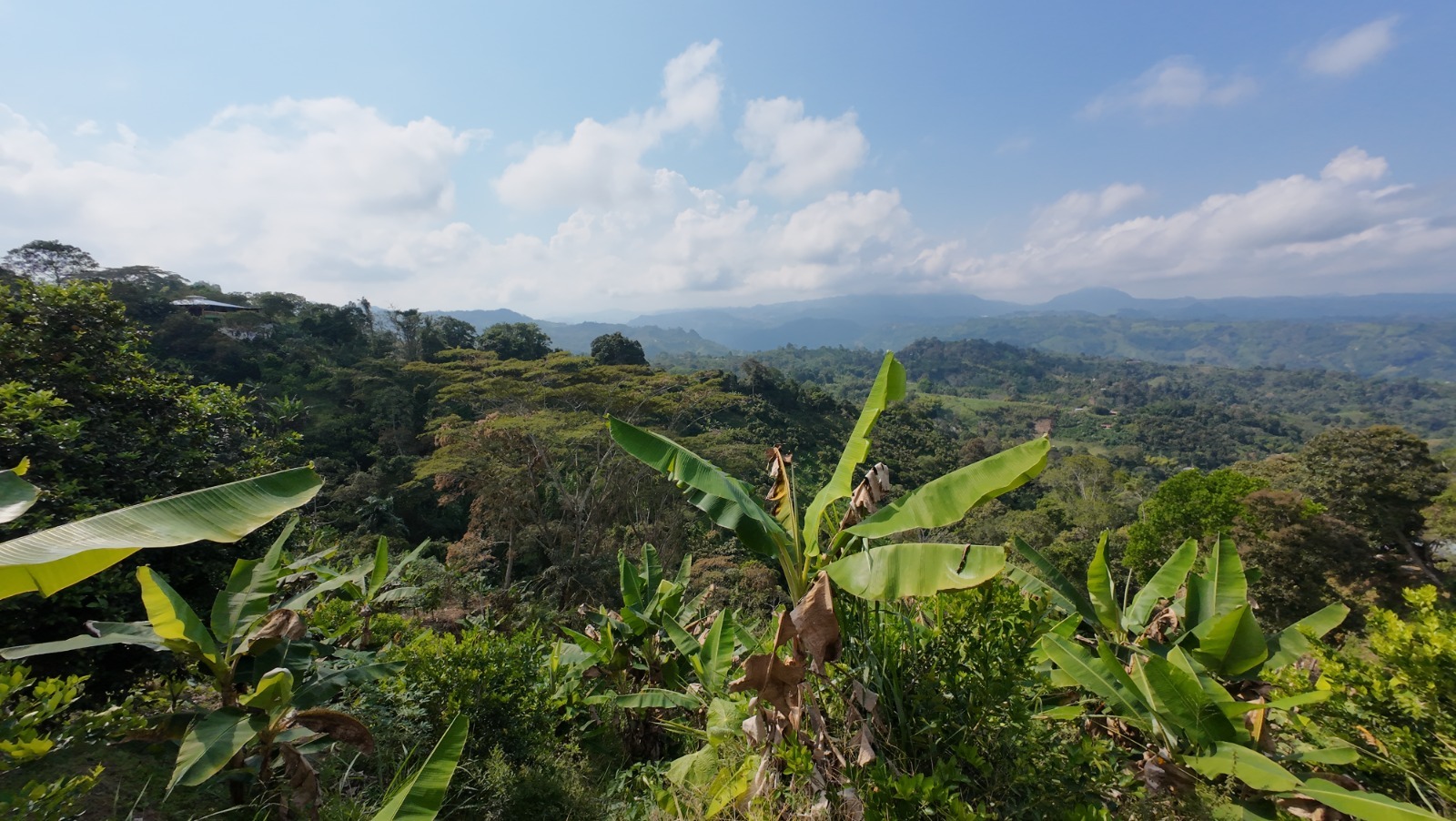
Until recently, 85% of the territory of Falán was primarily dedicated to agriculture, including the production of coffee, cacao, plantain, banana, avocado, and guava. Rich in biodiversity and home to several endemic species, the municipality has also seen ecotourism emerge as an increasingly important economic activity. However, in 2019, an agreement between the mayor’s office and the National Mining Agency (ANM) made the entirety of Falán’s territory open to mining activities. Thirteen exploration permits were granted by the ANM to three multinational companies, authorizing the exploration of 36,000 hectares for gold mining. All these developments happened without the public consultations that are legal requirements enshrined in the constitution of Colombia. Faced with the renewed arrival of multinational mining companies threatening their lands and livelihoods, communities raised their voices in opposition.
The community initiated a legal process arguing that the granting of mining permits threatened their fundamental rights. Thanks to the protests by communities and support from legal scholars, journalists and environmental activists, in 2023 the court suspended mining activities. However, a sudden reversal in 2024 in the court’s ruling and legal reasoning, lifted the suspension and explorations resumed. Fortunately, the ministry of agriculture and rural development got involved with their efforts to create protected areas for food production (APPA, Area de Proteccion para la Produccion de Alimentos) across the country. APPAs are a key development for food security in Colombia and pose a threat for mining interest by protecting the land. It is ironic that mining companies and industrialists are now claiming that APPAs take power away from local communities by granting power to the federal state to decide upon what can happen in a territory when its precisely them who have been restricting and hindering process of public consultation. Despite the corporate lobbying , 8 APPAs were declared in March 2026 across the North of Tolima, including Falán. Sadly, the mining lobby continues to discredit the APPA and is currently promoting a nationwide legal case against the APPA as being inconstitutional. Nonetheless, resistance against mining continues in active protests and in the creation of alternatives futures for the countryside. In the following section we’ll explore two practices in the North of Tolima that may teach us that ‘THere Exist Alternatives’ [THEA].
Lesson from THEA
“The main problem in rural areas is that young people no longer want to work the land. They see their parents working their whole lives without getting ahead, and that discourages them. (…) Just yesterday, or the day before, I heard that a sack of plantains, containing around 60 plantains, was being sold for 10,000 pesos. Yet in Bogotá, you can buy a single plantain for 2,000 or 2,500 pesos. Just one! And here they pay you 10,000 for all 60…
(…) I would dare say that the vast majority of Colombians come from the countryside, right? That gives us farming roots. Being here, living in the countryside, wanting to transform it, wanting to improve my territory for my own benefit, for my family, and also for my community—that is important to me. My husband and I have the idea of offering a self-sustaining farm experience combined with birdwatching. (…) There are more than ten endemic species in Falan, and on our farm alone you can see four or five of them. People are willing to pay to see what we see every day (…) People in the countryside need to make a living too; simply put, there are opportunities and possibilities here.
(…) We believe that soil is alive (…) That is why we use organic inputs here. We are learning a great deal through this process… It is important to start creating ecosystems. (…) Of course, that requires significant investment and certification. Farmers are tired, especially of institutional processes. These initiatives are often temporary. Projects begin with great ambitions, but because of budget issues or poor planning, they stall, and farmers are left halfway through the process, with only partial information and support.”
~ Vanessa, a campesina from the community in Falán, Tolima (Colombia)
In these excerpts we hear the voice of Vanessa. she shows that besides traditional agriculture, several agroecological and sustainable tourism initiatives are emerging in Falán. Vanessa is actively involved in training programs that support farmers in transitioning toward organic farming practices. Another project that shows the potential of existing alternatives in the North of Tolima is the ‘Reserva Charco del Indio’. This nature reserve pays tribute to the Panche, the Indigenous group that inhabited the region in pre-colonial times. The reserve focuses on birdwatching tourism and environmental education for local schools and communities. It also maintains a nursery of native plants and carries out ecological restoration activities.
Still, the lack of state support and funding opportunities are thwarting peoples desires and motivation to continue living in the countryside. Vanessa’s speech shows that the problem is not the countryside or the lack of employment opportunities. What is missing is a shared vision and the necessary investments to protect peoples’ livelihoods and improve the quality of life in the countryside. The arrival of the mining companies has only brought more uncertainty and tensions within the community. The promises of employment stand in stark contrast with the certainty that mining would undoubtedly wreck the existing agricultural economy of Falán by diverting and polluting its lifeline: water.
The stories emerging from Falan are not isolated. They echo a global pattern in which political power – swayed by corporate interests – decides the future of a territory without listening to the communities who inhabit and care for it. Across the globe people haven’t stopped mobilizing to defend their lands, waters, and ways of life. TINA has been used as shortcut for the interests of the ruling classes to restrict avenues for meaningful participation. Yet every act of resistance articulates a growing desire to build alternative futures rooted in collective decision-making and care for the land. THEA shows us that communities are already living in sustainable ways that go beyond extractivism. The question, then, is not whether alternatives are possible, but whether we’re willing to learn from these communities and enable democratic spaces for them to decide over their own futures.