The two Ghent pilot organisations of the ‘Fair ICT Flanders’ project, Ghent University and District09, both join Electronics Watch, an international NGO that strives for better working conditions in the production process of electronics. Read more “CATAPA pilot organisations commit to fair ICT”
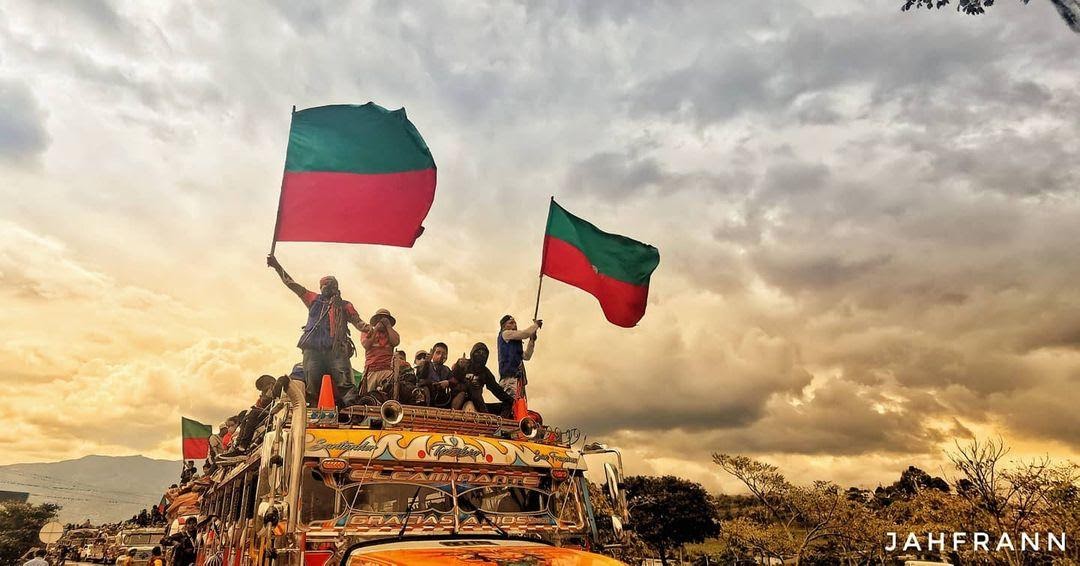
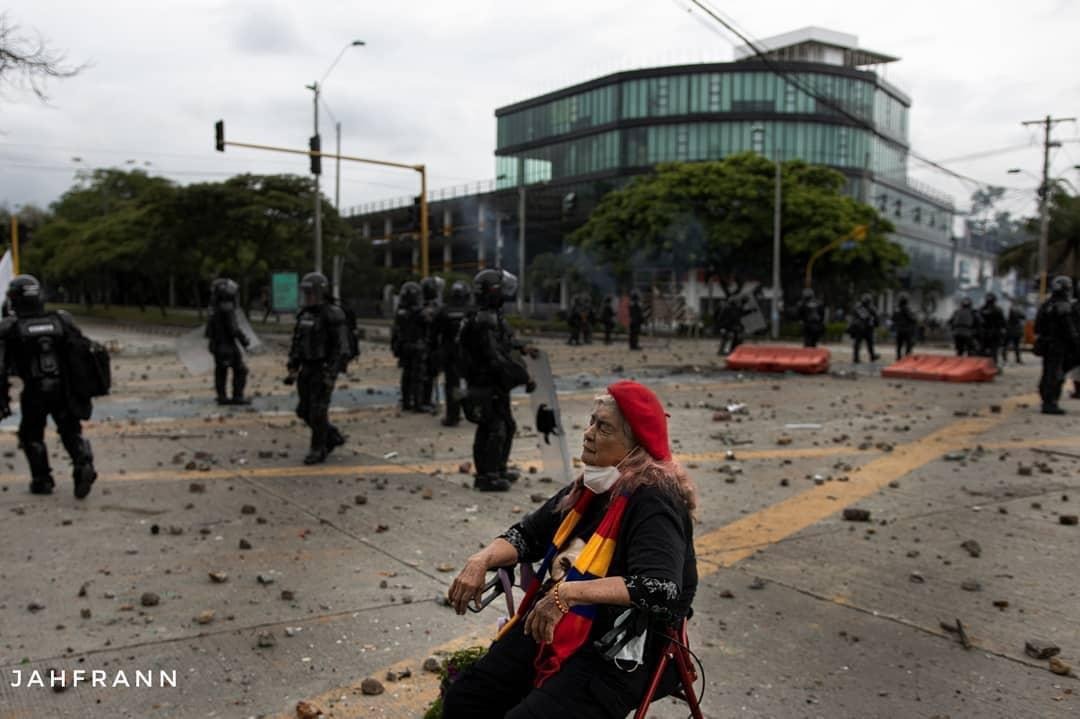
15 Days of Protests, 40 People Killed, More Than 400 Disappeared: The Colombian Government Responds with Extractivism
After 15 Days of demonstrations and 40 homicides caused by police in Colombia, the government of Iván Duque presents a bill to strengthen the investment of those who intend to exploit gold in the Paramo de Santurbán.
Fifteen days of demonstrations have passed in Colombia against tax policies aimed at taxing the basic family food basket, even though the minimum wage of Colombians is below US$260 per month, and the unemployment rate in the pandemic has increased by 14%. There are currently 1 million more unemployed than at the beginning of the pandemic in 2020.
The government has invested money in war, and announced the purchase of 24 war planes costing more than 4.5 billion dollars, despite the fact that the figures for police abuses in the protests are on the rise, with more than 40 demonstrators killed and some 500 people missing. Congressman Wilson Arias has denounced the purchase of more than 14 billion pesos in weapons for the ESMAD (Mobile Anti-Disturbance Squadron), the police used to repress protest in Colombia.
Colombia is literally in flames, the national press is biased, the information is manipulated, the alternative press is violated in the streets, even a journalist has had a grenade thrown at his head according to the denunciation of the FLIP (Foundation for Freedom of the Press).
…the Colombian government continues to strengthen it’s relationship with the government of the United Arab Emirates, a government that… has a controversial investment in the exploitation of GOLD and polymetals in the ecosystem of the Páramo de Santurbán, in northeastern Colombia.
The southwest of the country, where the strongest demonstrations are concentrated, has suffered power outages and the blocking of internet networks, making it impossible to broadcast the lives of the abuses occurring in the area. There has also been the appearance of civilians dressed in white clothes who call themselves “good citizens”, these people are heavily armed and there is no one to stop them, the police have escorted them on several occasions.
Not enough with this, on May 11, the national government has decided to propose bills 296 and 312 of 2020, through which the agreement signed between the Colombian government and the government of the Arab Emirates for the elimination of double taxation with respect to income and the prevention of tax evasion and avoidance and its protocols, signed in Dubai on November 12, 2017, would be approved.
This means that the Colombian government continues to strengthen the relationship with the government of the United Arab Emirates, a government that so far has a controversial investment in Colombia and it is about the exploitation of GOLD and polymetals in the ecosystem of the Páramo de Santurbán, in northeastern Colombia.
This ecosystem supplies the water supply for more than 2,500,000 people in Santander and Norte de Santander, a department that borders Venezuela. For the past 10 years, citizens have been demonstrating against this type of projects, and to date, 3 mega-mining projects have been stopped in the Páramo de Santurbán.
MINESA has encountered the same panorama as the previous investors in Colombia: a people that reject mega-mining exploitation
Two attempts by the multinational Greystar, one for open-pit mining and for which its environmental license application was denied. And the second, where the same company changed its name to ECO ORO and presented a subway mining megaproject in the same place where it had presented the previous application. The company has encountered opposition from the public. Its project goes against the principles of environmental protection in Colombian law, and in response to the denial of the company’s request, it has decided to sue the Colombian State before ICSID (World Bank) for more than US$764 million.
The third project corresponds precisely to that of the United Arab Emirates with its company MINESA, which belongs to the subsidiary of the sovereign wealth fund of the Emirate State: MUBADALA. MINESA has encountered the same panorama as the previous investors in Colombia: a people that rejects the mega-mining exploitation in Colombia and especially in the high mountains of the strategic ecosystems that supply water for the human consumption of 80% of the Colombian population.
So in January 2021 the National Environmental Licensing Authority (ANLA) has decided to archive this application for polymetallic exploitation, but the decision goes far beyond a technical equation of experts who consider totally risky and unfeasible a project of this scale in an ecosystem as fragile as the Páramos in Colombia.
It is not “only” the 9 million ounces of gold and other metals to be exploited by the Emirati prince’s fund. The decision is political. Previous Colombian governments (Alvaro Uribe Velez, Juan Manuel Santos) have made apparently “disinterested” transactions with the government of the United Arab Emirates, the most recent ones: a donation of 10 million dollars for economic reactivation in Colombia or the exorbitant sum of 150 tablets to “reduce the digital gap” in Colombia, a country with more than 50 million inhabitants.
Citizen complaints also go beyond ecosystem protection. So far, there is a regulatory vacuum regarding the delimitation of these ecosystems, and Santurbán specifically is not delimited. The scope of the environmental liabilities is not clear, nor is there any guarantee that the project will not impact the numerous populations living further downstream.
Imagine living in a rural community where there´s no Internet, no cable TV, close to no means of communication, and still being expected to continue your classes virtually. This is the case in many rural communities in Peru.
The situation regarding COVID-19 exposed many underlying problems in the country, which is why in May last year, Grufides and CATAPA started a new project tackling these issues with the help of the City of Antwerp.
The main goal of this project was to strengthen access to information and communication technology in rural communities in the context of COVID-19 in Cajamarca, Peru.
Join us for this webinar as we showcase the results of the project work, which focused on four communities in Cajamarca, Peru.
Discover how local citizens learned about their rights and how to claim them. Learn how citizen journalism can play a role via drawing attention to the communities internet and educational problems and reality. And see whether the government actually improved their access to ICT over the past year.
Excited to learn more about virtual education in smaller rural communities in Peru?
Excited to see the public denouncement through video and radio which the communities themselves made during this project?
Then join on Tuesday the 11th of May!
You can view, invite friends and share the Facebook eventhere
In Colombia, since April 28, 2021, a National Strike has been taking place against tax policies. The government has decided to tax the basic food basket in the middle of a pandemic, despite the fact that unemployment has increased by 14%.
Official figures state that in March 2020 there were 2,969,000 people unemployed, in March 2021 there are 3,437,000 unemployed people according to DANE.
The minister in charge and who proposed this tax reform, has been involved in millionaire corruption scandals in Colombia, and after 5 days of continuous strike, he resigned. Despite these scandals, he has been nominated as a candidate to be president of the Development Bank of Latin America – CAF.
Due to citizen pressure, the vice minister of finance Juan Alberto Londoño also resigned from his position. However he was immediately appointed as the new minister of commerce in Colombia.
The government has announced the withdrawal of the document proposing this tax reform, but as of today, it is still in the Colombian congressional system (which would approve it), filed as an Urgent request.
The Colombian government and security forces have been condemned by both the European Union and the United Nations for the ongoing human rights abuses against protestors, social movements and civil society who have taken to the street to oppose the tax policies.
CATAPA Joins Europe’s largest environmental network
After several years of fruitful collaboration, CATAPA has formalised it’s membership as an associate member of the European Environmental Bureau (EEB) – Europe’s largest network of environmental citizens’ organisations.
…agenda setting, monitoring, advising on and influencing the way the EU deals with issues.
The EEB brings together over 160 civil society organisations from more than 35 European countries, representing some 30 million supporters and members. It stands for sustainable development, environmental justice & participatory democracy.
CATAPA looks forward to working as an associate of the EEB to tackle Europe’s most pressing environmental problems by agenda setting, monitoring, advising on and influencing how the EU deals with these issues.
The core areas which CATAPA will be working on include; the economic transition, mining and waste prevention,ecodesign in the ICT sector as well as more broadly engaging in policy on climate change, energy, global supply chains, degrowth, Buen vivir, urban mining and resource reduction strategies.
CATAPA looks forward to bringing its expertise to the EEB, to keep the raw materials issue in all its complexity on the EU agenda…
While the primary focus of the EEB’s work is on the EU and its decision-making processes, it works also on wider regional and global processes, at the level of the UN and the OECD, particularly on the Global Agenda for Sustainable Development.
CATAPA looks forward to bringing its expertise to the EEB, to keep the raw materials issue in all its complexity on the EU agenda and to work for an economic alternative that puts well-being, not growth, at the centre of our society.
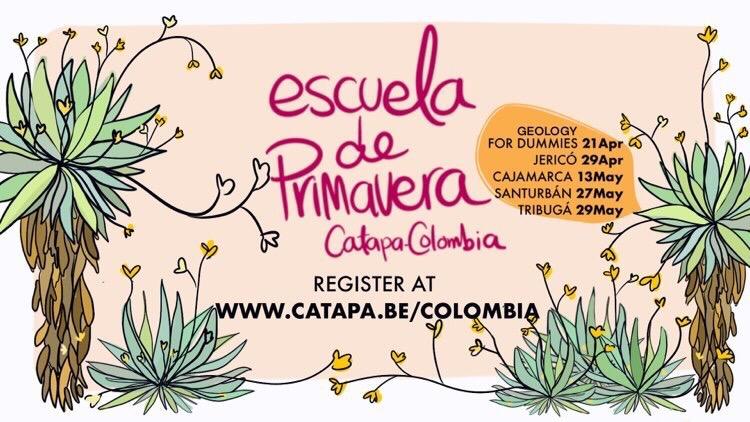
Learn about the struggle against extractivism in Colombia through our ‘Escuela de Primavera’.
This year CATAPA are hosting a new online spring school which will include a series of online sessions with front line defenders and scientists from Colombia. The ‘Escuela de Primavera’ aims to inform the participants on the specific struggles of various regions and peoples in Colombia.
We will learn why communities are fighting in resistance, how they are organised and what we can do to contribute.
Water pollution caused by toxic mining waste has radically transformed the regional ecosystem, poisoning the land.
Author – Giacomo Perna
During one of his visits to Macondo, Melquiades and his gypsies presented to the people what they declaimed to be the eighth wonder of the world of the wise Macedonian alchemists. It was a magnet. By means of this device, José Arcadio Buendía hoped to be able to dig up all the gold in the earth by simply dragging his ingots through the village. If only it really worked, for the world would have been spared centuries of pollution caused by mining. If it did, the lives of the people of El Tingo might be better today.
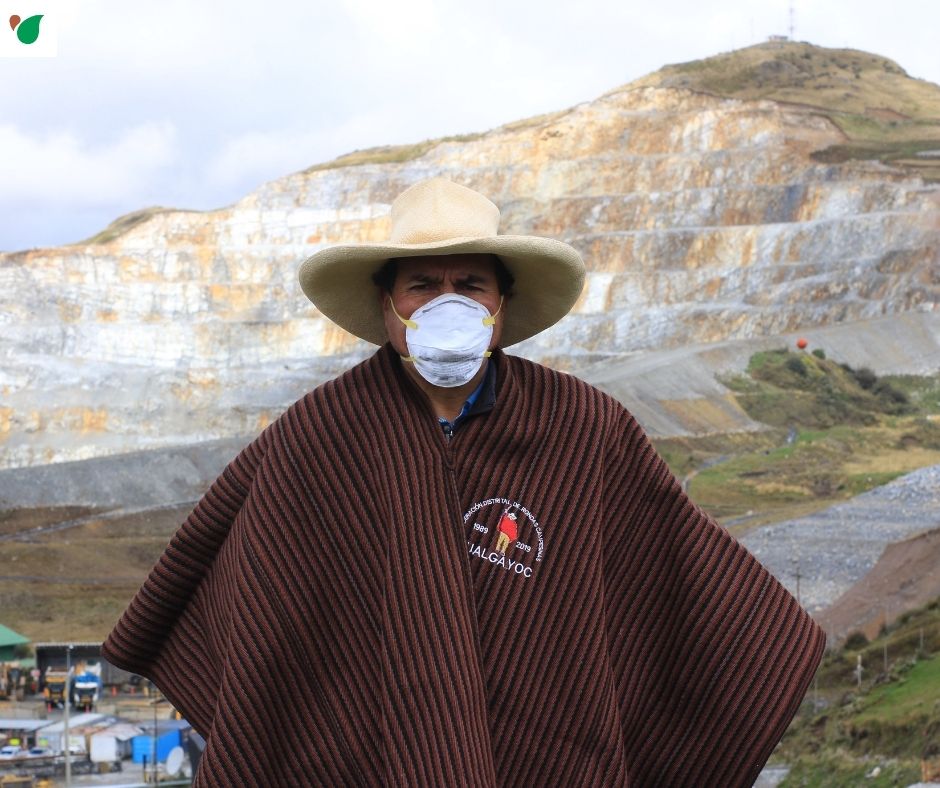
The community of El Tingo is currently without water. It’s such a controversial situation. Even though the area is rich in rivers and streams, nowadays every spring and water source is in a critical state of contamination, according to university studies and CATAPA’s report. Pollution has reached exasperating levels: it is so high that plants are burned due to the excess acidity of the waters.
The El Tingo community was born as a peasant community. The local economy has always been based on crops and livestock. The current situation prevents these activities from being carried out without risk. As a consequence of water contamination, cases of disease have increased significantly, dangerous amounts of heavy metals have been found in the blood of the inhabitants, and previously unseen malformations have started to appear in newborn animals. And it all happened because of the mining action that affected the territory
Every water source in the region is contaminated. Lack of resources and income afflict the area. Socio-economic growth promises made by the mining companies did not materialize.
The mining history of the region of El Tingo goes back many years. Environmental liabilities from mining projects of yesteryear still afflict the territory, threatening the well-being of local flora and fauna. Among them is, the San Nicolás project, started in 1972, whose remains represent a still open wound that scars the local environment.
The entire geographical area is seriously affected by excavation and mineral processing. The main reason is that the plans to minimize and neutralize the effects of the toxic waste were – and, according to the local community, still is – not respected and, today, the inhabitants of the area suffer from a lack of resources and income, in addition to directly experiencing the harmful effects of the mining waste.
The community of El Tingo is located in the district of Hualgayoc, in the region of Cajamarca. The area is rich in raw materials and minerals, which does not favor the well-being of the communities. In fact, El Tingo is located between two active mining projects that directly influence the development of life in the community: the Cerro Corona project, started in 2005 by the South African mining company Gold Fields, and the Tantahuatay project, started by the Peruvian company Coimolache, affiliated with the Peruvian company Buenaventura, which discovered the mine in 2010.
These companies have settled in the territory to exploit the huge mineral reserves present in the subsoil: gold, silver and copper. Initially, both companies arrived in the area promising improvements and development, signing social agreements and agreeing to promote socio-economic growth. Unfortunately, they did not live up to their words.
The curious thing is that Peru has a mine closure law. According to regulation passed in 2003, the state obliges companies that own mining projects to ensure the protection of the environment and to cease their activities in areas where mining action could cause environmental risks, but neither the government nor the companies have made any effort to respect – and enforce – this law.
The grass burns due to the high acid concentration of the waters. People and animals suffer from the diseases caused by the environmental pollution of the mining.
It is also worth mentioning that the region is subject to periods of heavy rainfall. On several occasions these rains have caused the tailing dams to overflow, leaking mining waste into the surrounding pastures and water basins and generating catastrophic consequences. An infamous example, is the case of December 2018, where a tailings spill caused the death of 17,000 trout present in the fish farm ‘La trucha de oro’.
The problem of pollution does not only affect the El Tingo area. The streams that traverse the territory flow into other rivers. Among them is the El Tingo-Maygasbamba river, which flows into the Amazon river and then crosses the continent to the Atlantic, carrying its poisons for thousands of kilometers.
On the economic side, the promises made by both Coimolache and Gold Fields company were not kept. According to the community, the agreements stipulated were not respected. Despite the promise not to bring foreigners into the region, companies soon began to hire outsiders to work in the mines. In addition, local workers often suffered violations of their labor rights: firing a local worker seems so much easier than firing a foreigner. Furthermore, the promises of prosperity did not materialize and no improvements were made to the roads, which are in a critical state. Even the local architecture suffers from the consequences of mining. Excavations to expand the mines are carried out through continuous detonations in El Tingo, which over time affects the integrity of community buildings. As a result, cracks and scratches populate the walls of many houses, jeopardizing the structural stability of the homes.
Local growth was not improved. The mining presence caused conflicts and social tensions.
The local community has resisted against the injustices from mining in the territory, evidenced by the social tensions that have been documented since 2008. Indeed, the people of El Tingo have risen up against mining servitude and exploitation. Protests and strikes have taken place over the years, demonstrating the commitment of the local community to defend their land and water.
The people of El Tingo have been organizing themselves autonomously in opposition to the mining industry and have also asked for assistance to publicize their struggle and finally be heard. It was for this reason, that CATAPA became actively involved in the territory together with its partner Grufides, conducting dozens of interviews and collecting water samples from the springs. The tests demonstrated a high level of contamination of the rivers and streams that cross the area. Through the interviews collected, a documentary was produced about the case of El Tingo, to give voice to the testimony of the local community. In addition to this, a webinar and a social media campaign were organized. Today, Grufides’ lawyers continue to fight alongside the communities legal representatives, to support the fight for justice.
The El Tingo history is a tale of unfulfilled promises and abuses. The pressure from the central economy is pushing the development of underdevelopment in the region, relegating the community to a situation of irreversible dependence. The area has become an oasis for mining extraction, a locus amenus where the West found the answers to its expansionist demands. It is hard to believe that such abuses are taking place today. The situation in which the inhabitants of El Tingo find themselves is intolerable, and CATAPA’s aim, together with its allies and the community, is to bring justice to a people who for decades have suffered the ravages of dispossession.
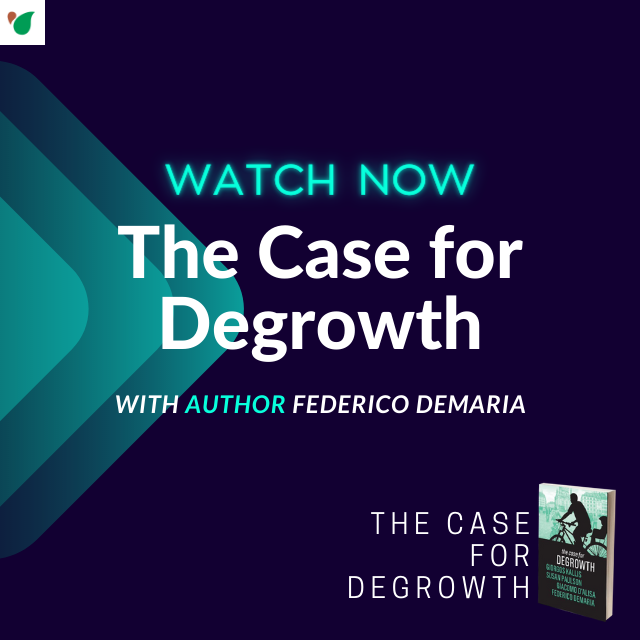
Join expert and author Federico Demaria as he presents his new book ‘The case for Degrowth’.
On Friday 19th February CATAPA in partnership with Oikos and The Centre for Sustainable Development, Gent University saw over 100 participants join the Book Lecture: The Case for Degrowth with Author Federico Demaria.
Federico opened by presenting his book and making a compelling case for degrowth economics. This was followed by an interesting panel debate featuring Hanne Cottyn of CATAPA, Irma Emmery of Centre for Sustainable Development, Gent University and Dirk Holemans of Oikos in conversation with the Author Federico Demaria.
The panel discussion ranged from, key and critical reflections on the book, the role of the state in a degrowth economy, the commons and much more.
To close, there was an audience Question & Answer session, after which the panelists gave their final thoughts on where can we find inspiration for a future in which degrowth is part of the transformation needed to tackle the contemporary challenges of ecological and climate breakdown.
This year CATAPA will again participate in Belmundo, the annual social and environmental justice festival in Gent that puts international solidarity in the foreground. Throughout March, a lot of organizations from Gent will offer all kinds of online and outdoor activities. This year’s theme is ‘system change’.
“There are many alternatives proposals for change which draw their strength from our diversity, creativity and solidarity. All of these ideas have strengths, limitations, contradictions and common points. But these are all proposals that question the current system and can contribute to a different world.”
Cinema Belmundo
This year CATAPA will co-organize Cinema Belmundo, a classic part of the festival. Every Tuesday in March you can enjoy either a feature length documentary or two short documentaries. On the penultimate Tuesday of the month , after being inspired by the films a public discussion on system change will follow.
CATAPA is also part of the ‘Where is TAMARA *’ section of the festival. TAMARA * is the acronym for ‘There are many alternatives ready and available’ and is a response to ‘There is no alternative’ (TINA) – the classic answer when you criticize (an aspect of) prevailing systems. While cycling, walking or from behind your computer, we are always looking for alternatives that deserve our attention. For example, why not take part in the interactive workshop on the limits to growth and the webinar exploring Buen Vivir, the good life and living well, both in Belgium and in Bolivia?
Not to be missed is the synthesis debate of ‘Where is TAMARA *’ on 31 March , where CATAPA, together with national and international speakers with lots of examples and hard evidence, will draw up a plan to give TAMARA * more space.
Visit the Belmundo website for even more inspiring online and offline activities such as exhibitions, lectures, webinars, a storytelling afternoon and interactive walks and bike rides about system change.
In 1957 the American newspaper The New Yorker published a poem by British poet W. H. Auden, the end of which recited: “Thousands have survived without love. Not one without water”.
Indeed, he was right. Despite attempts to raise awareness, today, a part of the world’s population still considers clean water as a given, eternally at their mercy, thanks to easy access to water resources. Unfortunately, they are wrong.
Water does not just come out of the pipe. Although it is a renewable resource, waste and pollution threaten to drastically reduce drinking water supplies. In some cases, human intervention in the environment can cause catastrophic effects on drinking water supplies. That’s what is happening in many parts of the world.
Mining poses a risk to drinking water sources in the vicinity of mining projects. In many cases, the chemical residues used in mineral extraction processes end up being dumped into rivers and streams, poisoning riverbeds and transforming water, a source of life, into a critical danger to life itself.
Due to the need to preserve the integrity of water in high-risk areas, such as those regions subject to mining activities, the project “Guardians of water” was born, as a result of a collaboration between CATAPA and the local organization Grufides, along with subsidies provided by the city of Ghent (Belgium).
If the water were to become contaminated, any plant or animal food from the region would be harmful for human consumption
The project, which started in January 2020, takes place in the Cajamarca region, in northern Peru, an area subject to high mining impact. The objective of the project is to strengthen environmental governance in the Environmental Monitoring Committees through the community participation in social management activities and water quality monitoring.
By being active in the territory, CATAPA, together with its local partners, seeks to promote the social commitment of native communities to safeguard the purity of the rivers that run through the Cajamarca region. Since the beginning of the project, CATAPA has been able to count on strong local participation and the support of several communities interested in preventing possible damage caused by the action of mining extraction.
The problem does not only concern the inhabitants of the rural areas closest to the mine. In fact, life in Cajamarca and its surroundings depends on the water coming from the highlands. The rivers that are in danger of contamination represent the most important source of drinking water for the city and its surroundings. It is this same water that irrigates the fields and quenches the thirst of farm animals. Natural products from the region depend directly on local water flows.
This means that if the water were to become contaminated, any plant or animal food from the region would be harmful for human consumption. In fact, recent studies by the OEFA (Organismo de Evaluación y Fiscalización Ambiental) have found the presence of 40% arsenic in avocados from Cajabamba, in the province of Cajamarca.
It should also be borne in mind that rivers are not sedentary entities, as their extension knows no jurisdictions. Many of the rivers affected – or threatened – by the presence of mines, run over vast areas, flowing to the coast or even joining other larger rivers, such as the Marañon, which ends up flowing into the giant sea river, the Amazon. A clear example of the large-scale dangers of river pollution can be found in the Tingo issue. The aim of CATAPA and its partners is to prevent another environmental disaster with such an impact.
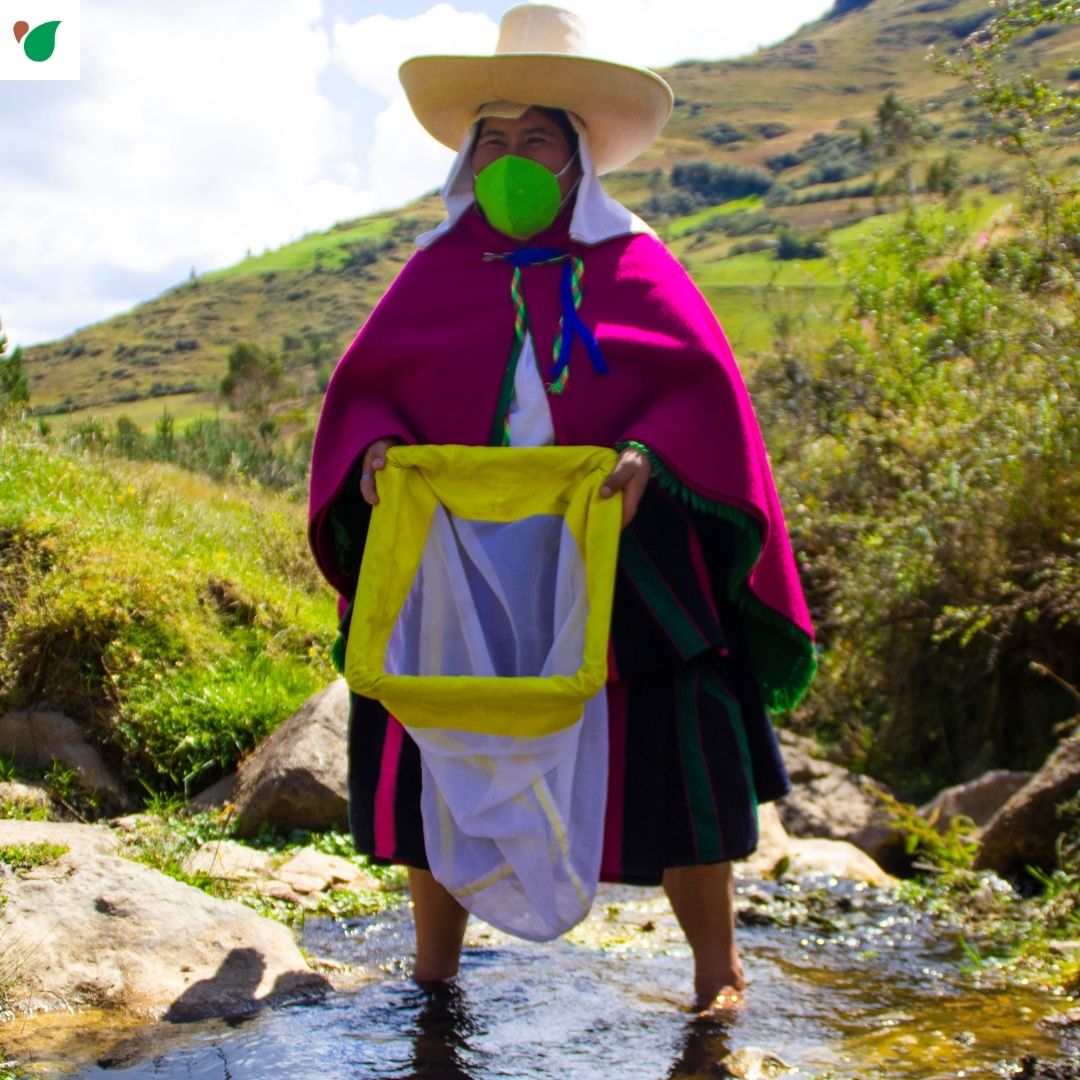
Local communities demonstrated their commitment by supporting the creation of committees dedicated to registering the state of river waters. Thanks to the action of CATAPA these committees have been consolidated and strengthened. Nowadays, water measurement tests are considered as legal tests to evaluate the state of the water before and after the mining action. These tests can be the basis for bringing charges against companies that have caused, through their actions or negligence, the pollution of rivers.
The opening of the mine represents a danger to the waters, as the mining waste could poison the river and the fields, composing the requiem for the region and its resources
The project was initially to focus on three local water basins, the Chetillano, San Lucas and Llaucan ones. The first water monitoring was carried out on the San Lucas river in Cushunga and on the Llaucan river in Bambamarca, with the participation of the local population and also with the support of the Environmental Vigilance Committees. Both tests proved the purity of the water.
The normal development of the project was temporarily slowed down due to the COVID-19 situation in the country, but the unforeseen event did not dampen the enthusiasm of CATAPA volunteers and local partners. In fact, to cope with the impossibility of moving around the region, the volunteers active in the territory adapted themselves to continue fighting. Webinars, virtual presentations and online workshops on methodologies and useful tools were organized to familiarize local populations with the process of community-based environmental monitoring of water quality. Photo campaigns were also promoted, videos and documentaries were published, and a basic guide was written to explain how to monitor water. Despite the difficulties of the pandemic, the activities were a success.
When the restrictions were partially lifted, water monitoring was able to start again. Unfortunately, interprovincial travel was prohibited, so no further tests could be carried out in the Bambamarca area. Therefore, it was decided to include the river La Encañada in the project. This river is located right next to the under-construction mining project called Michiquillay, scheduled for 2022. Concern among the local population is high, as construction work on the mine has been accelerated due to pressure from the Peruvian government, which is seeking to boost mining as part of a project to revive the country’s economy.
The opening of the mine represents a danger to the waters, as the mining waste could poison the river and the fields, composing the requiem for the region and its resources. Fortunately, a local committee is already in place to monitor the area. The situation of the La Encañada river is at extremely high risk, as it is an indirect tributary of the Amazon river. Its contamination would put an immense geographical area at risk.
Today, the Environmental Surveillance Committees, continue to monitor the waters autonomously, fulfilling their role as Guardians of the Water. The project ended in August 2020, but the second part has been underway since January 2021.
In fact, despite the achievements, the struggle is not over. Volunteers and local partners are drafting a detailed guide on how to carry out autonomous water monitoring, which will be delivered in Cajamarca and its surroundings. In addition, the initial project has revealed the importance of focusing on the La Encañada river, establishing local committees along its length, and the need for a law that officially recognize the presence of Environmental Monitoring Committees throughout the country.
Here you can find the link to the documentary CATAPA made in Cajamarca.
CATAPA gallery (all rights reserved)
This website uses cookies to improve your experience. We'll assume you're ok with this, but you can opt-out if you wish. Check out more info about all this here. More Info
This website uses cookies to improve your experience while you navigate through the website. Out of these, the cookies that are categorized as necessary are stored on your browser as they are essential for the working of basic functionalities of the website. We also use third-party cookies that help us analyze and understand how you use this website. These cookies will be stored in your browser only with your consent. You also have the option to opt-out of these cookies. But opting out of some of these cookies may affect your browsing experience.
Necessary cookies are absolutely essential for the website to function properly. This category only includes cookies that ensures basic functionalities and security features of the website. These cookies do not store any personal information.
Any cookies that may not be particularly necessary for the website to function and is used specifically to collect user personal data via analytics, ads, other embedded contents are termed as non-necessary cookies. It is mandatory to procure user consent prior to running these cookies on your website.